Being in Toronto, of course we had to visit Niagara Falls. Niagara Falls actually consists of two parts: American Falls and Horseshoe Falls. At night, a series of search lights provide the both the American and Horseshoe falls with colored lights.
Niagara Falls has a lot to do, besides looking at the falls. Our activities:
1) Maid of Mist, a boat ride around the horseshoe falls. The falls creates a lot of moisture, it feels like it's raining. The boat gets close to the horseshoe falls. Depending on how close, it will feel like anything ranging from a drizzle to a heavy downpour.
2) White water walk, a walk along the rapids of the Niagara River. These are some of the most intense rapids in the world.
3) Niagara Fury, a movie and a simulated ride. In the ride you stand on a moving platform and literally feel the creation of Niagara falls.
4) Journey Behind the Falls. We took an elevator to the bottom of the gorge and walk through tunnels behind the horseshoe falls. We could hear the water rushing in the tunnel. There was also an observation deck where we got to stand at the bottom of the falls.
Check out more Niagara Falls Pictures.
Tuesday, September 8, 2009

Sunday, September 6, 2009
Toronto
My dad had some frequent flier miles to burn so we made a family trip to Toronto and Niagara Falls (see above post).
Our Toronto activities:
1) Several meals in Chinatown
2) Visited the University of Toronto
3) Walked around downtown, passing by City Hall, and visiting Eaton Centre
4) Toronto Island, located in Lake Ontario a few miles from downtown Toronto. The island is one big park with tons of trails for walking and biking. There are also beaches. There is also a small airport on the island which is used mostly by private planes and regional jets. We got great views of the Toronto city skyline both from the boat ride to the island and from the island itself.
5) CN Tower, built to broadcast radio and TV signals throughout Southern Ontario. It was the tallest building in the world until the Taipei 101 opened. We were on the observation deck which included a glass floor, where you can see the ground below you. It was unsettling to walk on the glass floor at first, but you get over it. Quite an experience. I like how the tower lights up in various, continuously changing colors at night.
Our Toronto activities:
1) Several meals in Chinatown
2) Visited the University of Toronto
3) Walked around downtown, passing by City Hall, and visiting Eaton Centre
4) Toronto Island, located in Lake Ontario a few miles from downtown Toronto. The island is one big park with tons of trails for walking and biking. There are also beaches. There is also a small airport on the island which is used mostly by private planes and regional jets. We got great views of the Toronto city skyline both from the boat ride to the island and from the island itself.
5) CN Tower, built to broadcast radio and TV signals throughout Southern Ontario. It was the tallest building in the world until the Taipei 101 opened. We were on the observation deck which included a glass floor, where you can see the ground below you. It was unsettling to walk on the glass floor at first, but you get over it. Quite an experience. I like how the tower lights up in various, continuously changing colors at night.
Saturday, August 29, 2009
Seattle
Seattle is a great place to visit during the summer with cooler temperatures than Texas. Seattle is known for its many coffee shops, including Starbucks, Seattle's Best, and other local joints. There is a coffee shop on almost every corner in downtown Seattle. Seattle residents really do need their caffeine.
I stayed in downtown Seattle at the Sheraton hotel, located 2 blocks from a light rail station and about 10 minute walk to Pike Place Market and the harbor.
For my Seattle visit, I focused on the main tourist sites, including:
1) Waterfront, where I went on a cruise around the Seattle harbor. This 1-hour tour provides views of the Seattle skyline, Mt. Rainier, the Space Needle, Olympic Mountains, Starbuck's headquarters, and Seattle's many ports.
More Seattle harbor pictures.
2) Pike Place Market, consisting of many gift shops, food stands, restaurants, and cafes including the first ever Starbucks. There is also the Pike Place Fish Market where workers throw fish around. Many visitors stop by just to see the fish throwing.
3) Flying into Seattle on a Boeing airplane, it was fitting for me to visit their Future of Flight center in Everett, which consists of an aviation museum with information about Boeing's planes, and a tour of Boeing's factory. Interestingly, the museum also includes information about some Airbus planes as well. Boeing's factory, where they build their 747, 767, 777, and 787 airplanes is the world's largest building by volume. The factory is like an indoor city with a fire department, security, clinic, power station, water treatment plant, and numerous restaurants. Factory workers use bikes and golf carts to get around. The factory even created its own weather. Heat from the ground would rise and combine with the cooler air near the top, creating clouds and even drizzle. The weather cleared when air-circulation systems were installed. For the factory tour, we saw the 747, 777, and 787 manufacturing lines and learned about the process in building those planes, including assembly of parts, painting, and test flying (there is a small airport for this). Photography of the factory is not allowed, so I have no factory pictures.
4) Space Needle observation deck. I went up there just before sunset, and enjoyed daytime and nighttime views of Seattle from above. The Space Needle was built in 1962 to give Seattle a stand-out structure for the Seattle World's Fair. The Space Needle was build to withstand winds up to 200 mph, and earthquakes up to 9.0 in magnitude. So during a powerful storm or a major earthquake, the Space Needle is probably the safest building to be in.
I stayed in downtown Seattle at the Sheraton hotel, located 2 blocks from a light rail station and about 10 minute walk to Pike Place Market and the harbor.
For my Seattle visit, I focused on the main tourist sites, including:
1) Waterfront, where I went on a cruise around the Seattle harbor. This 1-hour tour provides views of the Seattle skyline, Mt. Rainier, the Space Needle, Olympic Mountains, Starbuck's headquarters, and Seattle's many ports.
More Seattle harbor pictures.
2) Pike Place Market, consisting of many gift shops, food stands, restaurants, and cafes including the first ever Starbucks. There is also the Pike Place Fish Market where workers throw fish around. Many visitors stop by just to see the fish throwing.
3) Flying into Seattle on a Boeing airplane, it was fitting for me to visit their Future of Flight center in Everett, which consists of an aviation museum with information about Boeing's planes, and a tour of Boeing's factory. Interestingly, the museum also includes information about some Airbus planes as well. Boeing's factory, where they build their 747, 767, 777, and 787 airplanes is the world's largest building by volume. The factory is like an indoor city with a fire department, security, clinic, power station, water treatment plant, and numerous restaurants. Factory workers use bikes and golf carts to get around. The factory even created its own weather. Heat from the ground would rise and combine with the cooler air near the top, creating clouds and even drizzle. The weather cleared when air-circulation systems were installed. For the factory tour, we saw the 747, 777, and 787 manufacturing lines and learned about the process in building those planes, including assembly of parts, painting, and test flying (there is a small airport for this). Photography of the factory is not allowed, so I have no factory pictures.
4) Space Needle observation deck. I went up there just before sunset, and enjoyed daytime and nighttime views of Seattle from above. The Space Needle was built in 1962 to give Seattle a stand-out structure for the Seattle World's Fair. The Space Needle was build to withstand winds up to 200 mph, and earthquakes up to 9.0 in magnitude. So during a powerful storm or a major earthquake, the Space Needle is probably the safest building to be in.
Saturday, July 4, 2009
Independence Day in San Francisco
This was a continuation of my last trip to San Francisco in Labor Day of last year. It also allowed me to escape the Texas summer heat for a few days, and enjoy the great San Francisco summer weather of sunny skies and temperatures in the 50s and 60s. In fact, San Francisco summers are almost on par with typical Austin winter weather. Mark Twain once said, "the coldest winter I have experienced is a summer in San Francisco". The great weather, combined with Chinatown and other distinct features of San Francisco, make it one of my favorite summer destinations.
I stayed in the Financial District, near the Embarcadero, in the Le Meridien hotel. Since this area caters to business travelers, you can get good deals at luxury hotels here. Check out this note left by a housekeeper. It's just a simple thank you note, but it was a nice gesture and it shows the housekeepers really appreciate tips :)
1) Checked out the demonstration window of Boudin Bakery in Fishermans Wharf, where you can see bakers making sourdough bread, some shaped like animals like this turtle. I highly recommend their clam chowder in a bread bowl.
2) Visited Ghirardelli Square
3) Ate in Chinatown
4) Walked the Golden Gate bridge
5) Rode the glass elevator in the Westin St. Francis hotel where I got nice views of Union Square.
6) Went to Coit Tower, build in honor of firefighters which explains the fire hose shape of the building. Rode the elevator to the top (about 27 stories) to take in birds-eye views of the city.
7) Visited the Levi Plaza, which included a visitor's center with displays about the Levi jeans history and development, as well as information about other Levi products.
8) Took a cruise in the San Francisco Bay, sailing to the Golden Gate Bridge, around Alcatrez Island, and docked near Pier 33 in Fishermans Wharf to watch the fireworks. Being on the cruise ship offered the best views of the fireworks, and is less crowded than standing in Fishermans Wharf. With temperatures in the high 50s, it was by far the coldest Independence Day I have ever experienced.
9) Checked out the Farmer's Market in the Ferry Building. They have many samples of bread, fruit, sauces, and juices.
10) Rode the cable cars - they are a fun way to get around (though not the fastest) and you get to experience how people got around in SF in the late 1800s.
I stayed in the Financial District, near the Embarcadero, in the Le Meridien hotel. Since this area caters to business travelers, you can get good deals at luxury hotels here. Check out this note left by a housekeeper. It's just a simple thank you note, but it was a nice gesture and it shows the housekeepers really appreciate tips :)
1) Checked out the demonstration window of Boudin Bakery in Fishermans Wharf, where you can see bakers making sourdough bread, some shaped like animals like this turtle. I highly recommend their clam chowder in a bread bowl.
2) Visited Ghirardelli Square
3) Ate in Chinatown
4) Walked the Golden Gate bridge
5) Rode the glass elevator in the Westin St. Francis hotel where I got nice views of Union Square.
6) Went to Coit Tower, build in honor of firefighters which explains the fire hose shape of the building. Rode the elevator to the top (about 27 stories) to take in birds-eye views of the city.
7) Visited the Levi Plaza, which included a visitor's center with displays about the Levi jeans history and development, as well as information about other Levi products.
8) Took a cruise in the San Francisco Bay, sailing to the Golden Gate Bridge, around Alcatrez Island, and docked near Pier 33 in Fishermans Wharf to watch the fireworks. Being on the cruise ship offered the best views of the fireworks, and is less crowded than standing in Fishermans Wharf. With temperatures in the high 50s, it was by far the coldest Independence Day I have ever experienced.
9) Checked out the Farmer's Market in the Ferry Building. They have many samples of bread, fruit, sauces, and juices.
10) Rode the cable cars - they are a fun way to get around (though not the fastest) and you get to experience how people got around in SF in the late 1800s.
Sunday, June 7, 2009
Chicago - part 3
My third trip to Chicago. Summers in Chicago are always fun. I made this trip to enjoy cooler weather and do some things I didn't get to in my previous Chicago trips. Weather was cooler than I expected though - 50's and 60's which are more typical for fall in Chicago. But compared to the 95+ weather in Austin, I can't complain.
So, for my short weekend trip:
1) Checked out a free art festival with artists setting up booths throughout a block along Michigan Avenue.
2) Grabbed dinner at a cafe in Greektown
3) Visited Buckingham fountain at night. There is an evening show at the fountain featuring colored lights and patriotic music.
4) Architectural cruise, which is a boat ride along the Chicago River. This has become one of my favorite Chicago activities.
5) Visited the Hershey's store, with a wide array of chocolate products and featured a demonstration on making the store's specialty cupcakes
Pictures:
Chicago River
Buckingham Fountain
With the new transparent Ledge now open in the Sears Tower, that will definitely be something I plan to do for my next trip to Chicago.
So, for my short weekend trip:
1) Checked out a free art festival with artists setting up booths throughout a block along Michigan Avenue.
2) Grabbed dinner at a cafe in Greektown
3) Visited Buckingham fountain at night. There is an evening show at the fountain featuring colored lights and patriotic music.
4) Architectural cruise, which is a boat ride along the Chicago River. This has become one of my favorite Chicago activities.
5) Visited the Hershey's store, with a wide array of chocolate products and featured a demonstration on making the store's specialty cupcakes
Pictures:
Chicago River
Buckingham Fountain
With the new transparent Ledge now open in the Sears Tower, that will definitely be something I plan to do for my next trip to Chicago.
Sunday, May 31, 2009
Washington DC - May 2009
A weekend visit to the US capital city.
1) Library of Congress, and take a tour of the US Capital.
2) Went to the White House visitor's center, located a few blocks from the White House itself. This is the best way to get information about the White House. To actually get in the White House, you need to either have an appointment or write to your local Senator to get tickets, which can take several months. Otherwise, the closest any visitor will get to the White House is on Pennsylvania Avenue.
3) Museums I visited:
a) U.S. Botanic Garden
b) American History
c) Air and Space
4) Walked by some of the memorials.
1) Library of Congress, and take a tour of the US Capital.
2) Went to the White House visitor's center, located a few blocks from the White House itself. This is the best way to get information about the White House. To actually get in the White House, you need to either have an appointment or write to your local Senator to get tickets, which can take several months. Otherwise, the closest any visitor will get to the White House is on Pennsylvania Avenue.
3) Museums I visited:
a) U.S. Botanic Garden
b) American History
c) Air and Space
4) Walked by some of the memorials.
Tuesday, May 12, 2009
Baltimore
Baltimore has historical significance as it is the birthplace of the Star Spangled Banner, the U.S. national anthem.
Baltimore's Inner Harbor is a great to place to be near the ocean and enjoy great crabs. Baltimore residents really love their crabs. The harbor has street performers, seafood restaurants, many boat tours and cruises, and shops. There is also the World Trade Center of Baltimore, which is the world's tallest pentagonal building. There is an observation deck which offers great views of the city.


To understand Baltimore's place in US history, visit Fort McHenry. The fort can be reached from Inner Harbor by a water taxi, which is a boat making stops along the Baltimore coast. It operates like a shuttle bus in the water. Waits for the boat can be long (about 20 minutes) especially if you have to transfer so the water taxi is not the fastest way to get around but it is the most fun way. I recommend the water taxi if you're not pressed for time.
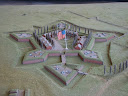
Fort McHenry was built to protect the city of Baltimore from attack. Soldiers would live there and plan ways to defend Baltimore from the fort. The fort also has places (called magazines) to store supplies such as gun powder, canons, and canon balls. During the War of 1812, the British attempted to capture Baltimore and sent several ships to Chesapeake Bay to attack Fort McHenry. This became known as the Battle of Baltimore. The British soldiers shot bomb shells and rockets from the ships and the American soldiers in the fort fired canons. Most of the British shots missed the fort. The attacks went on for 25 hours. In the early morning of a September day in 1814, the British gave up and turned away. On the Chesapeake Bay about 2 miles from Ft McHenry, Francis Scott Key saw the whole thing from the attack to the British surrender. He also saw a giant flag (which Mary Pickersgill had sewn) being flown, still intact after the attacks - it was this moment when he wrote a poem titled "Defence of Fort McHenry". This poem was then renamed to "The Star-Spangled Banner" and became the U.S. National Anthem.
More Pictures
Baltimore's Inner Harbor is a great to place to be near the ocean and enjoy great crabs. Baltimore residents really love their crabs. The harbor has street performers, seafood restaurants, many boat tours and cruises, and shops. There is also the World Trade Center of Baltimore, which is the world's tallest pentagonal building. There is an observation deck which offers great views of the city.
To understand Baltimore's place in US history, visit Fort McHenry. The fort can be reached from Inner Harbor by a water taxi, which is a boat making stops along the Baltimore coast. It operates like a shuttle bus in the water. Waits for the boat can be long (about 20 minutes) especially if you have to transfer so the water taxi is not the fastest way to get around but it is the most fun way. I recommend the water taxi if you're not pressed for time.
Fort McHenry was built to protect the city of Baltimore from attack. Soldiers would live there and plan ways to defend Baltimore from the fort. The fort also has places (called magazines) to store supplies such as gun powder, canons, and canon balls. During the War of 1812, the British attempted to capture Baltimore and sent several ships to Chesapeake Bay to attack Fort McHenry. This became known as the Battle of Baltimore. The British soldiers shot bomb shells and rockets from the ships and the American soldiers in the fort fired canons. Most of the British shots missed the fort. The attacks went on for 25 hours. In the early morning of a September day in 1814, the British gave up and turned away. On the Chesapeake Bay about 2 miles from Ft McHenry, Francis Scott Key saw the whole thing from the attack to the British surrender. He also saw a giant flag (which Mary Pickersgill had sewn) being flown, still intact after the attacks - it was this moment when he wrote a poem titled "Defence of Fort McHenry". This poem was then renamed to "The Star-Spangled Banner" and became the U.S. National Anthem.
More Pictures
Subscribe to:
Posts (Atom)